
If I Were Starting My Community Management Career in 2026, I’d Focus on This First
If I were starting my community management career today, this is the first thing I’d work on, before applying for roles, before worrying about tools, and even before chasing job titles.

If I were starting my community management career today, this is the first thing I’d work on, before applying for roles, before worrying about tools, and even before chasing job titles.
A few days ago, I was helping another community manager.
She was genuinely capable. She had a strong technical background, had volunteered in community spaces, and clearly understood how online communities function.
On paper, she was more than qualified.
And yet, she was struggling to find a new role.
What stood out wasn’t a lack of skill or experience. It was confidence, or more accurately, the ability to clearly communicate her value as a community manager.
When Being “Qualified” Isn’t Enough
She didn't have years of experiece, but she had a lot of experience from other roles, and some volunteer community management under her belt.
She tried to include everything she’d ever done. Every task, every responsibility, every adjacent role.
But what it didn’t do was clearly answer one simple question:
Why should someone hire her as a community manager?
There was no clear focus. No obvious positioning. No simple way for a hiring manager, founder, or team lead to quickly understand what she actually brings to a community role.
This isn’t just a LinkedIn problem. And it’s not just about job hunting.
When you can’t clearly articulate your value, it affects:
- Promotions
- Pay negotiations
- The level of trust you’re given
- How seriously your work is taken
- Your own sense of confidence and self‑worth
And over time, it shapes the entire direction of your career.
Why This Is So Common in Community Management
I see this pattern over and over again with community managers.
And honestly, it makes sense.
Community management isn’t standardised.
Job titles vary wildly. Expectations change from company to company. “Community” can mean anything from moderation, to social posting, to events, to strategy, to customer support, sometimes all at once.
And if you don’t define your value, someone else will.
Usually in a way that:
- Undervalues your impact
- Reduces your role to “nice to have”
- Or frames community as purely operational instead of strategic
What I’d Do Differently If I Were Starting Again
If I were starting my community management career in 2026, I’d start by getting very clear with myself.
I’d ask:
- Why would I be genuinely valuable in a community management role?
- What problems do I help solve?
- What outcomes have I actually influenced?
- Where are my gaps, and how can I intentionally build them?
And I’d back that up with real examples, not vague statements. Linking to past experiences, even if it's not directly a community role.
That clarity becomes the foundation for everything else:
- Your LinkedIn profile
- Your CV
- Interviews
- Salary conversations
- And the roles you say yes or no to
Community Managers Have to Be Extra Intentional
Because our role isn’t clearly defined by explaining the value of what we do.
That’s why community managers, especially early in their careers, need to be extra intentional about how they position themselves.
It’s not about exaggerating your impact. It’s about learning how to communicate it clearly and confidently.
That skill alone can change the trajectory of your career.
And if you’re early in your community journey, or feeling stuck despite doing good work, this is where I’d tell you to start.
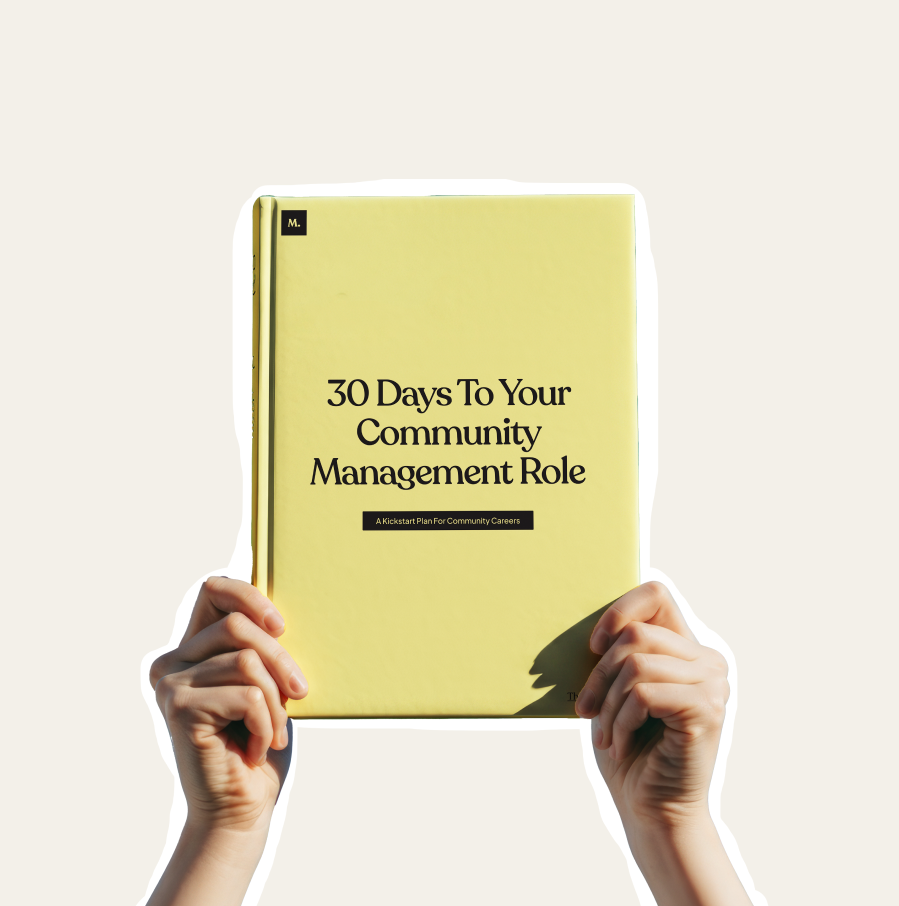
Get the 30-Day To Your Community Management Role, a free step-by-step guide to help you grow your career starting this month.
AND free training!
💬 And if you want personalized support, feedback, or help applying these steps to your situation, book a free personal guidence chat